Conflict – Issues and actors
A federal republic of 36 states and the Federal Capital Territory, Nigeria is the most populous country in Africa. The state is made up of 250 ethnic groups, the largest of which are the Hausa, Igbo, Yoruba and Fulani. Over 500 languages are spoken, with English the official language.
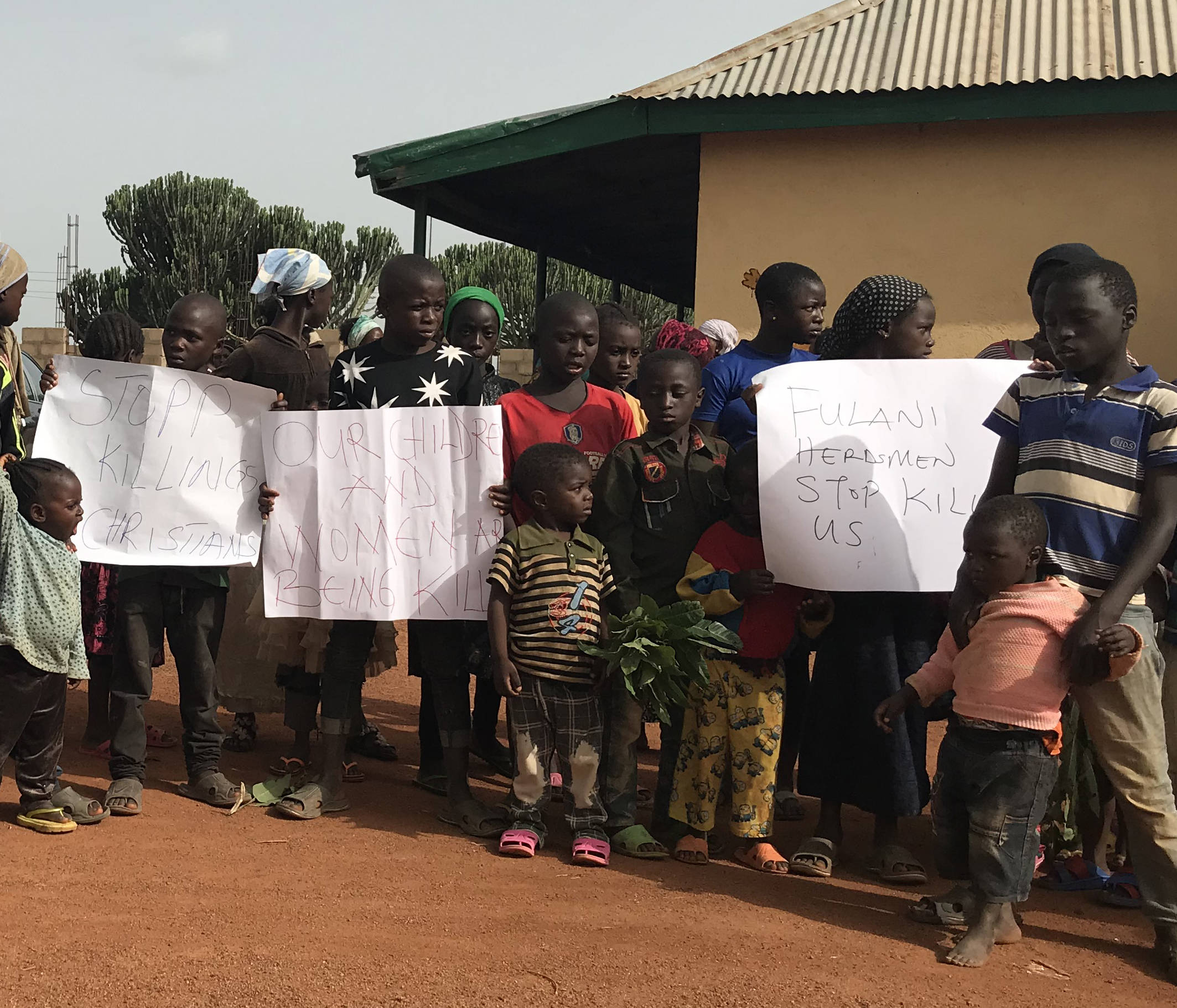
More than 1,300 people are estimated to have been killed this year in outbreaks of communal violence across Nigeria. Land rights are at the root of the conflict with farmers accusing Fulani nomadic herders of destroying their crops as they drive their cattle across cultivated land. In a bid to ease tensions, two southern states, Benue and Taraba, introduced a ban on cattle grazing in November 2017. As a result there was an exodus of herders into neighbouring states, sparking clashes with farmers there. The new conflict comes on the heels of an Islamic insurgency by the Boko Haram group in 2009 and its violent suppression by government forces and has now overtaken the insurgency in terms of the number of lives claimed.
Between them, Boko Haram and Fulani militants have created over 2 million internally displaced persons, according to International Organization for Migration (IOM) estimates.
Boko Haram
The Group of the People of Sunnah for Preaching and Jihad, more commonly known as Boko Haram which translates as “Western education is sinful” is a Nigeria-based Sunni jihadist militant organisation. Since 2009 and the death in police custody of its founder Mohammed Yusuf Boko Haram has carried out many acts of violence, kidnappings and bombings. More than 20,000 people are estimated to have been killed in northeastern Nigeria since the insurgency began, while nearly two million others have been driven from their homes. In 2014 the group captured control of swathes of territory and declared an Islamic state. It frequently attacks churches and mosques. Targeted by the Multinational Joint Task Force which includes forces from Benin, Cameroon, Chad, Niger and Nigeria, Boko Haram has lost ground as a result of military defeats and has become factionalised. But in recent months it has intensified attacks on military bases in Borno and nearby Yobe state, undermining claims by the military that they have the upper hand.
Fulani
A Muslim tribe believed to be the largest semi-nomadic group in the world, the Fulani are found across West and Central Africa. In Nigeria, some continue to live as semi-nomadic herders, while others have moved to cities. The pastoralists herd their animals across vast tracts of land. The Boko Haram insurgency and increasing desertification have forced herders to leave their traditional grazing lands in the north and move south into traditionally Christian farming areas in search of grazing land and water. A militant minority of heavily armed Fulani have carried out a wave of brutal attacks on Christian communities in the central belt where churches and homes have been destroyed, and locals killed or forced to flee. Such attacks have fuelled the belief that the Islamic militants are intent on genocide of the Christian population.
Islamic State West Africa Province (ISWAP)
A faction of Boko Haram that has pledged allegiance to terror group ISIS, ISWAP was responsible for the kidnappings of 110 schoolgirls in the northern town of Dapchi, Yobe State, in February 2018. In March it abducted two International Committee of the Red Cross (ICRC) aid workers, who it later killed.